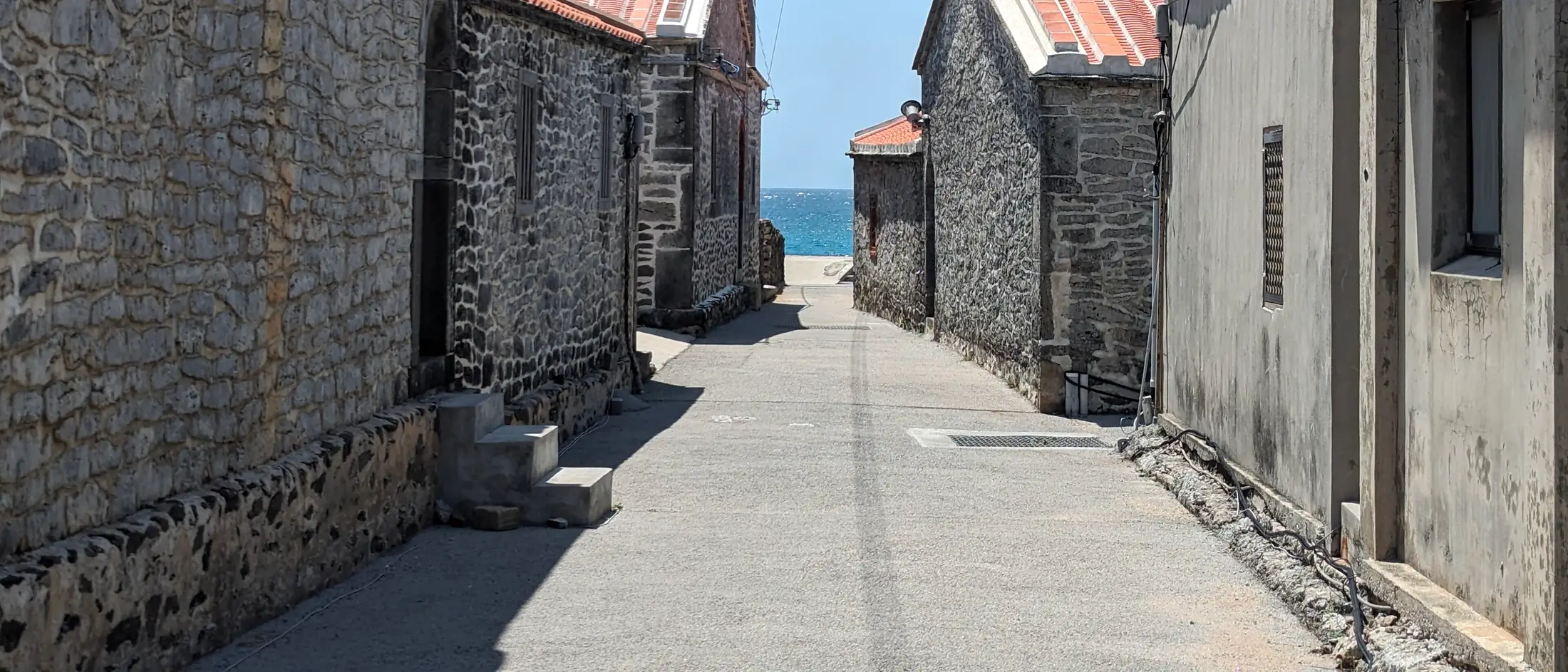
Designed by wind. Built from stone.
Architecture, materials and island culture of the Penghu Islands.
StoneWindSettlementSea
Penghu has ninety islands, no forest, no rivers and six months of wind. Almost nothing here was built out of preference. What survives is a building culture with an unusually small vocabulary and an unusually complete grammar.
- Northeast monsoon
- Oct–AprSeasonal mean wind speed 6.3 m/s.
- Building stone
- Two kindsBasalt from the cliffs, fossil reef limestone from the flats.
- Stone weirs recorded
- up to 606Tide-operated fish traps, mostly over a century old.
- Highest point
- 70 mAcross 141 km² of land.
Four readings of the same archipelago
Penghu can be read as a geology, as a climate, as a settlement pattern or as a fishery. Each reading explains a different part of what is standing.
-
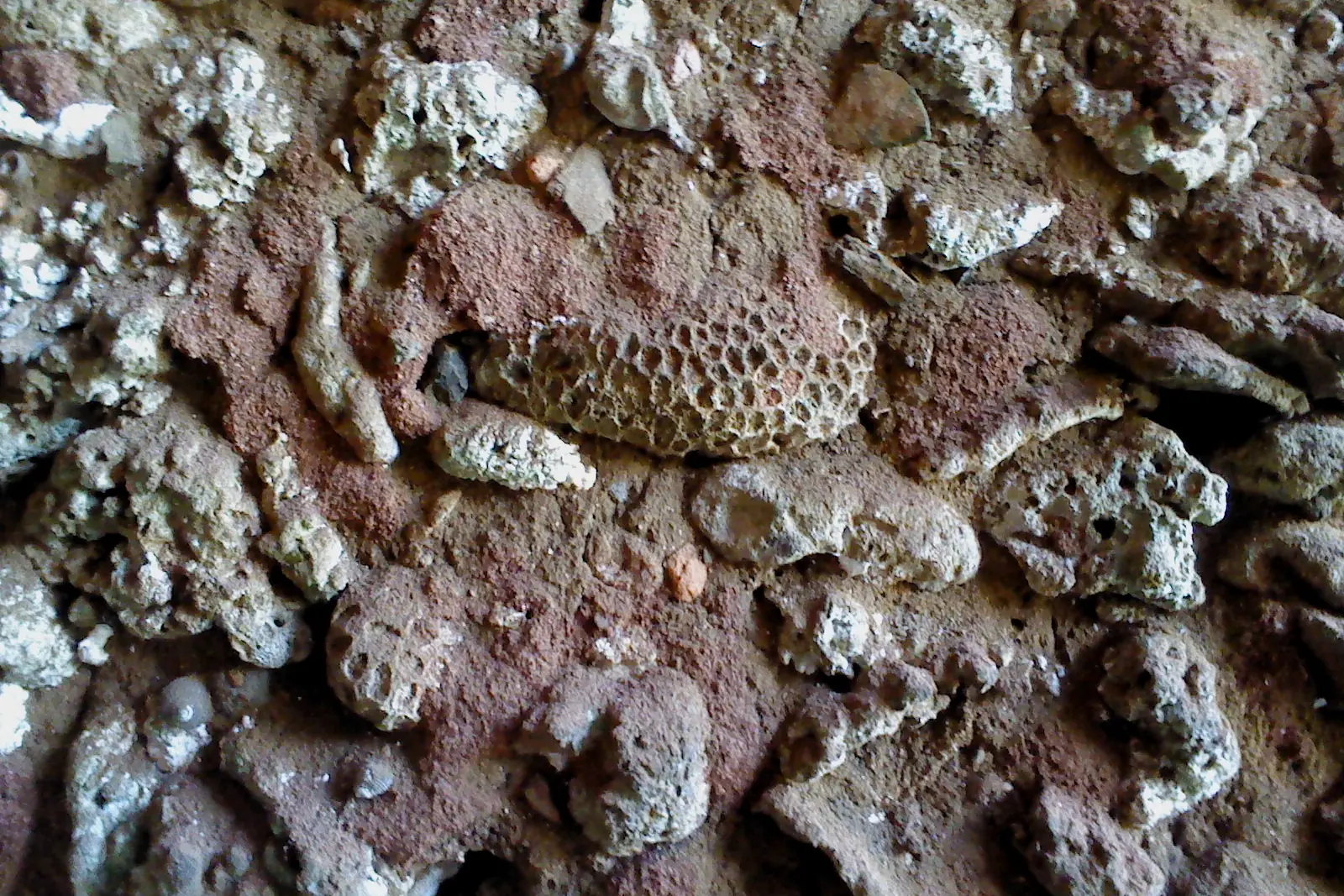
Stone
Basalt from a Miocene lava field and fossil reef limestone from the tidal flats. One is dense and goes at the bottom of a wall; the other is light, porous and grips itself. Everything built here is some arrangement of those two facts.
-
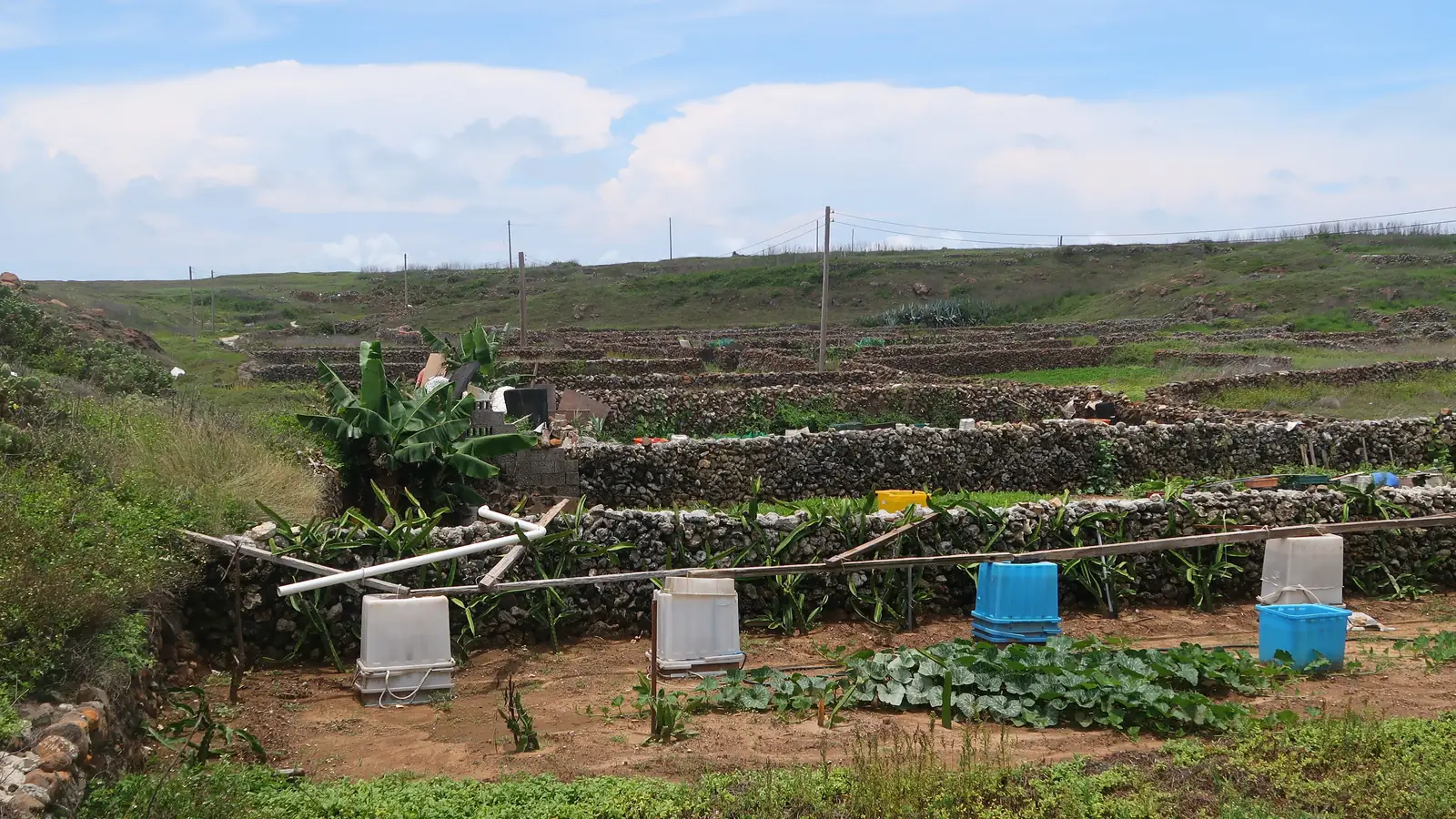
Wind
Six months of northeast monsoon at a measured seasonal mean of 6.3 metres per second, carrying salt. It removed the trees, which removed the timber, which decided the structure of every building on the archipelago.
-
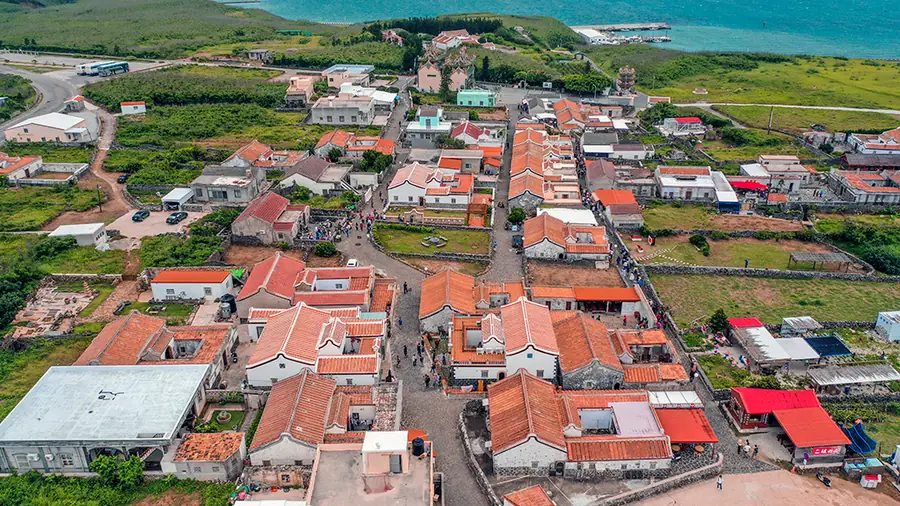
Settlement
Villages face one way together, cluster tight enough to shelter each other, put their fields immediately outside the houses, and mark their edges with five small objects instead of a wall.
-
Sea
The intertidal zone was the most heavily built surface in Penghu. Several hundred stone weirs, jointly owned and maintained for generations, fished the winter when no boat could leave.
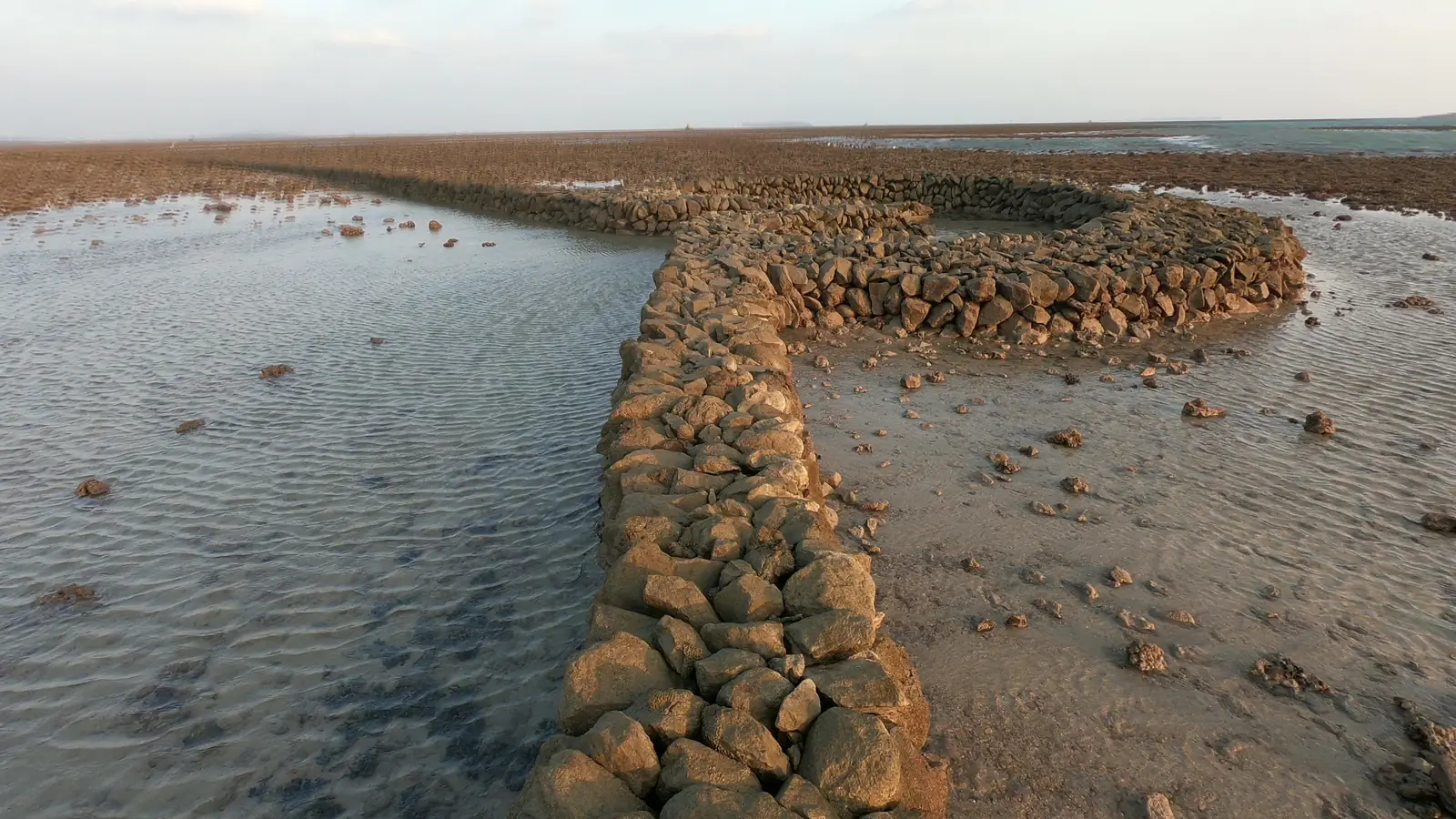
A wall in the sea, four hundred metres long, owned by nobody in particular
Feature · Landscape
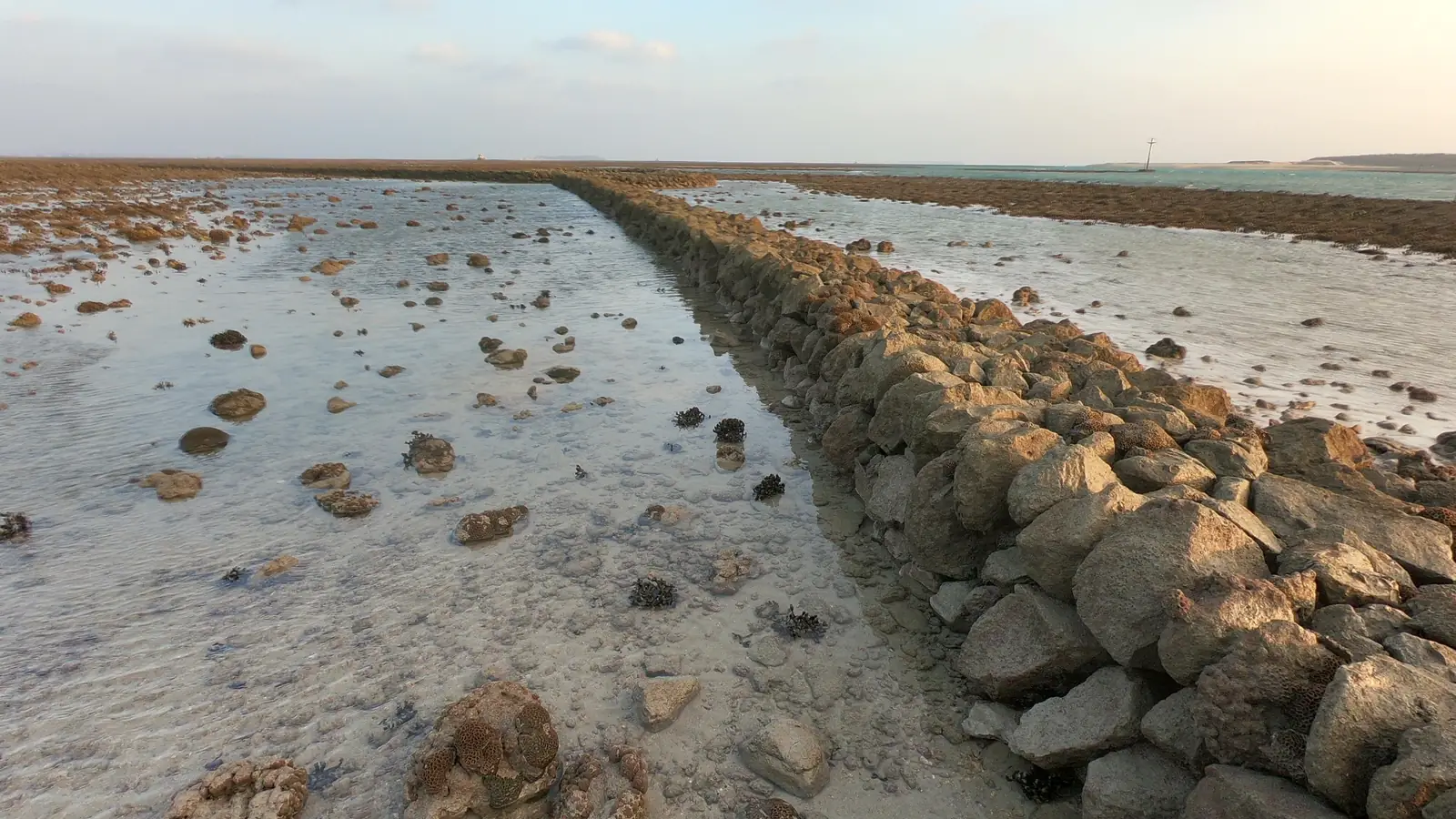
A stone weir is not a dam. Its crest is set between high and low water, so the flood tide covers it and the ebb strands whatever swam over it. Hong’s survey records eight tasks in building one. Only one of them is construction; two are about people and one is about worship.
Where to start
Nine entry points into the publication. Each one links onward to the rest.
- 01
Architecture
How a treeless archipelago with two kinds of stone and six months of wind produced a coherent building culture.
- 02
Traditional houses
The four-wing courtyard compound in plan: main range, wings, courtyard, porch, gate tower and the working yard outside.
- 03
Coral stone (laogushi)
Fossil reef limestone, gathered at low tide and weathered for years before it could be built with. Its economy, its regulation and its end.
- 04
Stone weirs
Nearly six hundred tide-operated fish traps built by hand on the intertidal flats, jointly owned, maintained for centuries, and now almost entirely obsolete.
- 05
Erkan village
A single-lineage Chen settlement on Xiyu, built on money made in Tainan and designated in 2001 as Taiwan’s first traditional settlement preservation area.
- 06
Columnar basalt
How the columns formed, how tall they get, and the three protected islets that carry Taiwan’s case for World Heritage status.
- 07
Zhongshe village (Huazhai)
Historically Huazhai, the “flower village”: the largest early Han settlement surviving in Taiwan, and the only one nationally registered as an Important Settlement Building Complex.
- 08
Walled crop plots (caizhai)
Private stone enclosures around a few square metres of vegetables, graded by wind exposure and first recorded in 1730.
- 09
Temple architecture
In a building culture with no monuments, the village temple is the exception — and Magong holds the oldest Mazu temple in Taiwan.
Two settlements, two instruments of protection
Penghu’s two designated historic settlements are protected under entirely different legal categories, and the difference shows in what has survived.
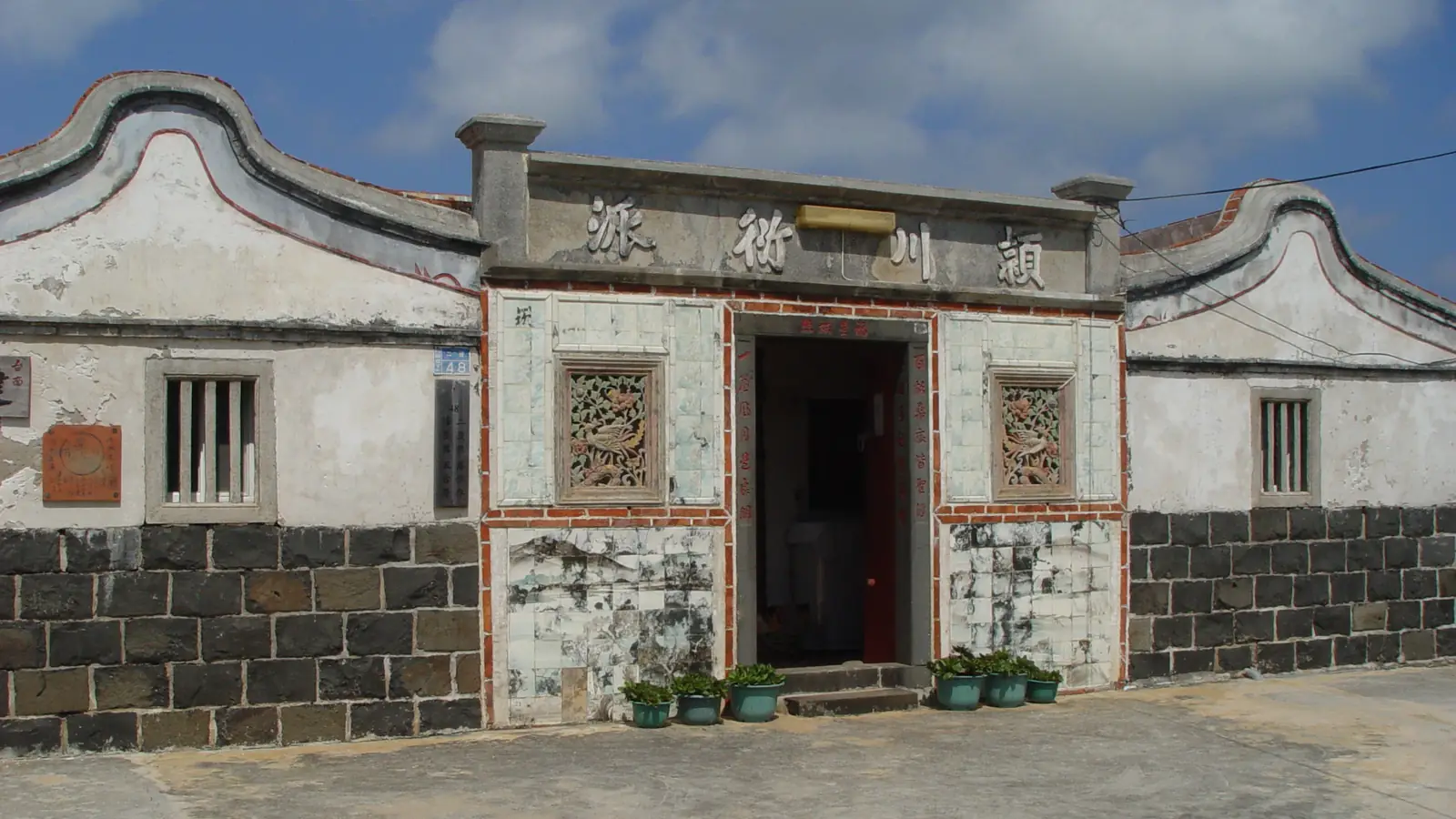
Erkan · Xiyu · designated 2001
A planning designation, heavily restored
Erkan was named Taiwan’s first Traditional Settlement Special District by the Ministry of the Interior in 2001 — a planning instrument, not a cultural-heritage listing. Its houses have been repaired, re-rendered and re-roofed, which preserves plan and proportion accurately and makes the masonry harder to read.
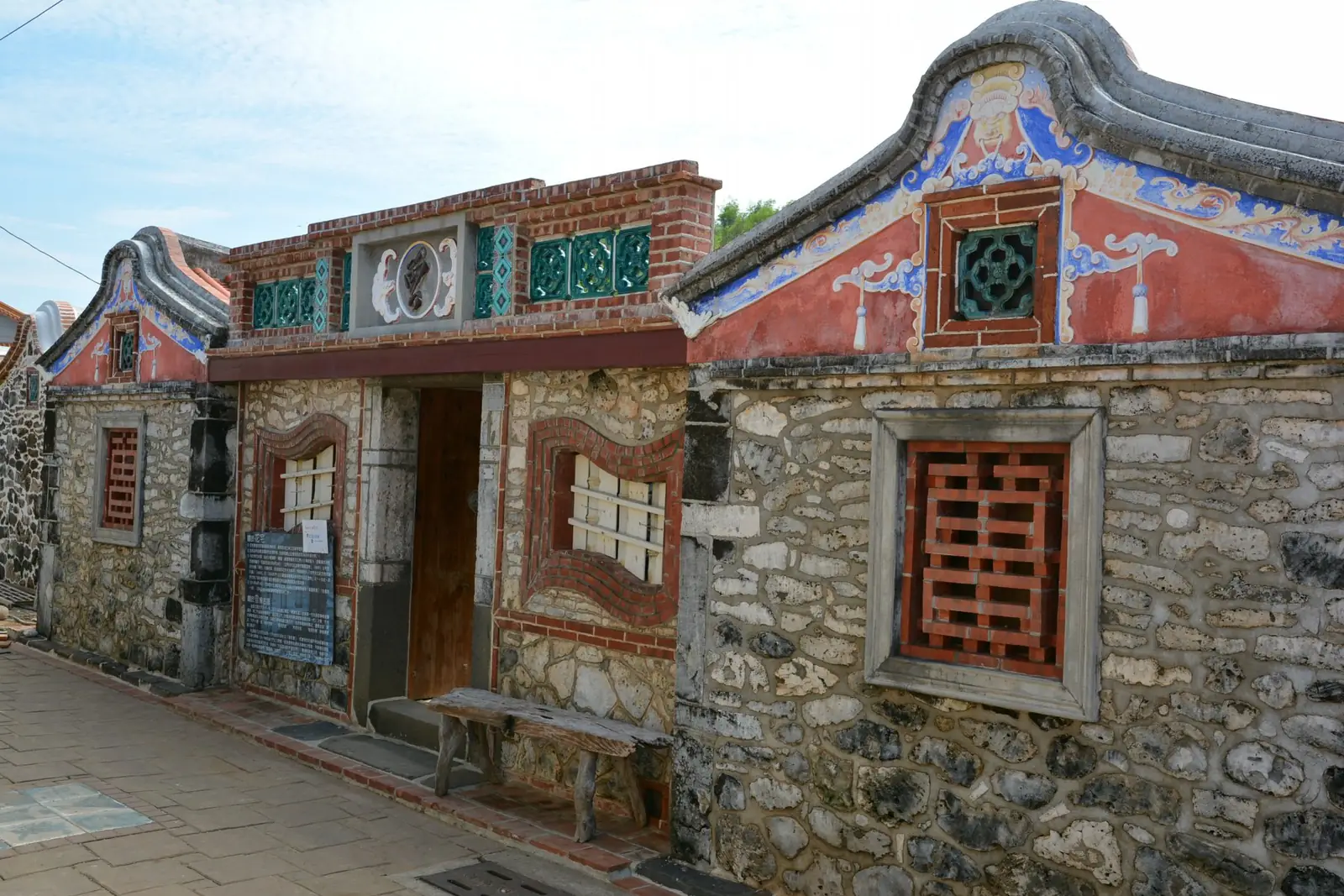
Zhongshe · Wang’an · designated 2010
A national listing, and the only one
Zhongshe — historically Huazhai — was placed on the World Monuments Watch in 2004, registered at county level in 2006, and in 2010 became the first and still the only settlement in Taiwan registered as an Important Settlement Building Complex. About fifty of its roughly 150 houses remain intact.
About this publication
Every substantive claim here is traceable to a named source, and where the sources disagree the disagreement is printed rather than resolved.