
The exception in the fabric
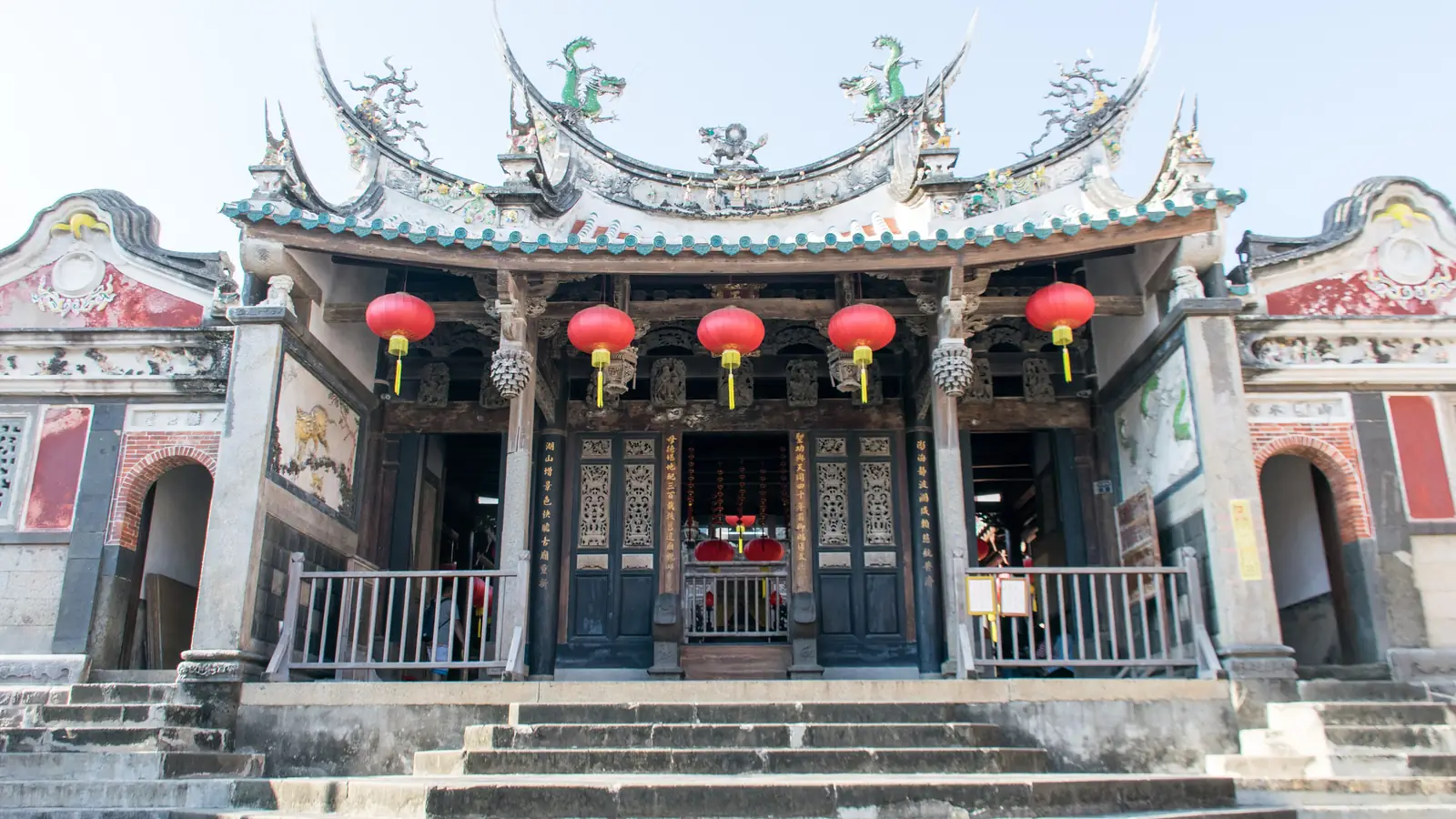
Read a Penghu settlement as architecture and the temple stands out on every measure. It is taller. Its ridge forks, where domestic ridges do not. It carries carved timber, which nothing else does. It is set back into its own forecourt in a village where every other building runs to the lane. And it is the datum for the 五營, the five camp posts that mark the settlement’s edges — the centre post is normally the temple itself.
Temples also absorbed the skills the domestic tradition could not afford. The carpenters, carvers and shard-work plasterers who worked in Penghu did their most complete work here, often brought in from the mainland for a single campaign.
Penghu Tianhou Temple, Magong
The most important building in the archipelago and, by general consent, the oldest Mazu temple in Taiwan. It is listed as a national historic site of the first grade.
What can be said about the date
Less than is usually printed. Proposed founding dates run from the early Ming through an enlargement in 1563 after Yu Dayou’s campaign against pirates, to 1592, 1593 and 1604. The evidence most often cited is a stele of 1604 recording an ultimatum delivered to the Dutch commander Wijbrand van Waerwijck — attributed in different sources to Shen Yourong or to Yu Dayou’s son Yu Zigao. The stele was rediscovered in 1919.
What the stele establishes is that something stood on this site in 1604. It does not establish when it was first built. The honest statement is that the temple is very probably the oldest Mazu foundation on Taiwanese territory and that its founding year is contested.
The building you see
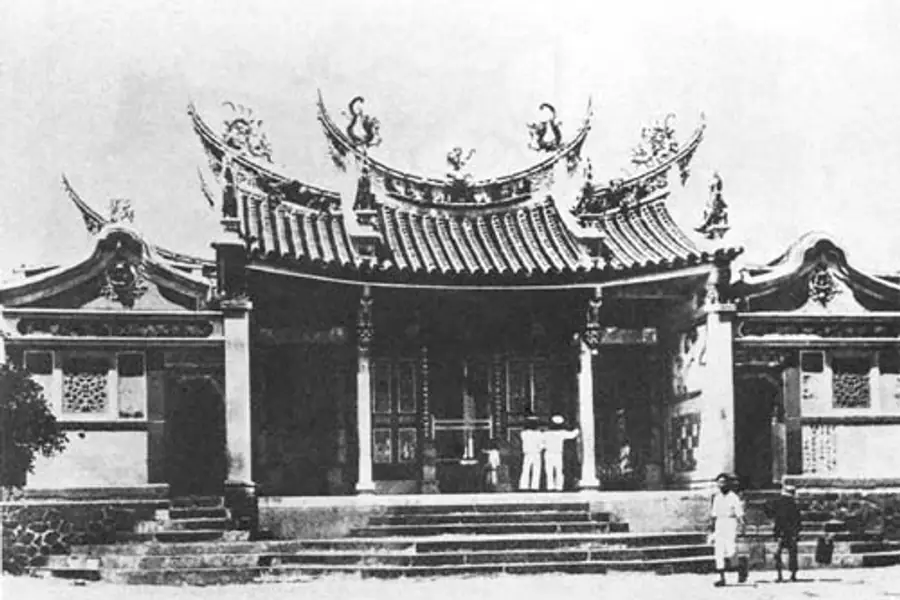
The temple names the city. It began as Niangma Temple, became Tianfei Temple in the sixteenth century, and took the title Tianhou after the Qing elevation of Mazu; Magong is a contraction of the temple’s name.
Its plan is three halls in sequence — a front hall known as the Shanchuan, a main hall and a rear hall — with flanking ranges on both sides. Crucially it is built on a slope and does not level it: the halls step up from front to back, so the approach is a climb and the rear hall sits highest. In an archipelago this flat, deliberately using a gradient is itself a statement.
The fabric is largely of the 1922 rebuilding, which employed craftsmen from Tangshan, Guangzhou and Chaozhou. The Chaozhou woodcarving dates from that campaign, not from the seventeenth century.
What to look for in a village temple
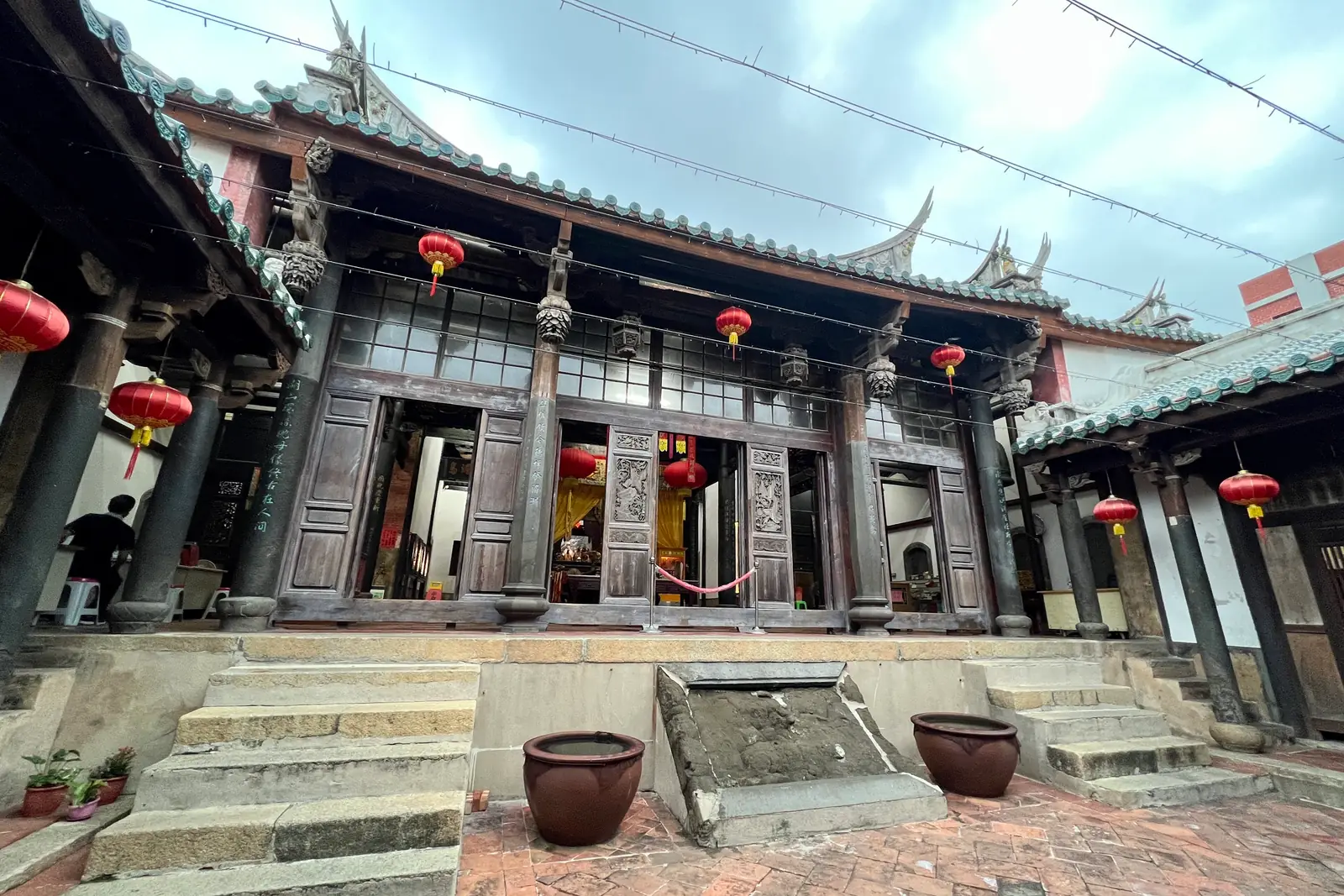
- The ridge. Forked and upswept — 燕尾 — where the houses around it are plain. On a large temple the form is repeated over each hall.
- The front wall. The one place in a Penghu settlement where stone is carved rather than merely laid: dragon columns, door drums, relief panels.
- The shard work. 剪黏, figures built up from cut porcelain on the ridge and gable. It survives salt air better than paint and much better than carved timber.
- The forecourt. The only public open space in most villages, and the only place a Penghu settlement gives away ground.
Sources
- Penghu Tianhou (Mazu) Temple, Taiwan Religious Culture Map, Ministry of the Interior; with Wikipedia: Penghu Tianhou Temple for the disputed founding dates.
- Mazu Temple, Penghu National Scenic Area Administration, MOTC.
- Central Street, Magong, Wikipedia, drawing on Penghu County Government material.